What Your Eyes Can Reveal About Your Overall Health: Why Comprehensive Eye Exams Matter


When was the last time you had a comprehensive eye exam?
If your vision seems clear, you may assume there's no reason to schedule one. But an eye exam is about much more than determining whether you need glasses or updating your prescription.
Your eyes can provide valuable information about your overall health, and some eye conditions can develop before noticeable changes in your vision occur. That's one reason routine comprehensive eye exams are an important part of maintaining your health—not just your eyesight.
Your Eyes Are More Connected to Your Health Than You May Realize
The eyes contain many tiny blood vessels, nerves, and other structures that can provide your optometrist with a unique view of your health.
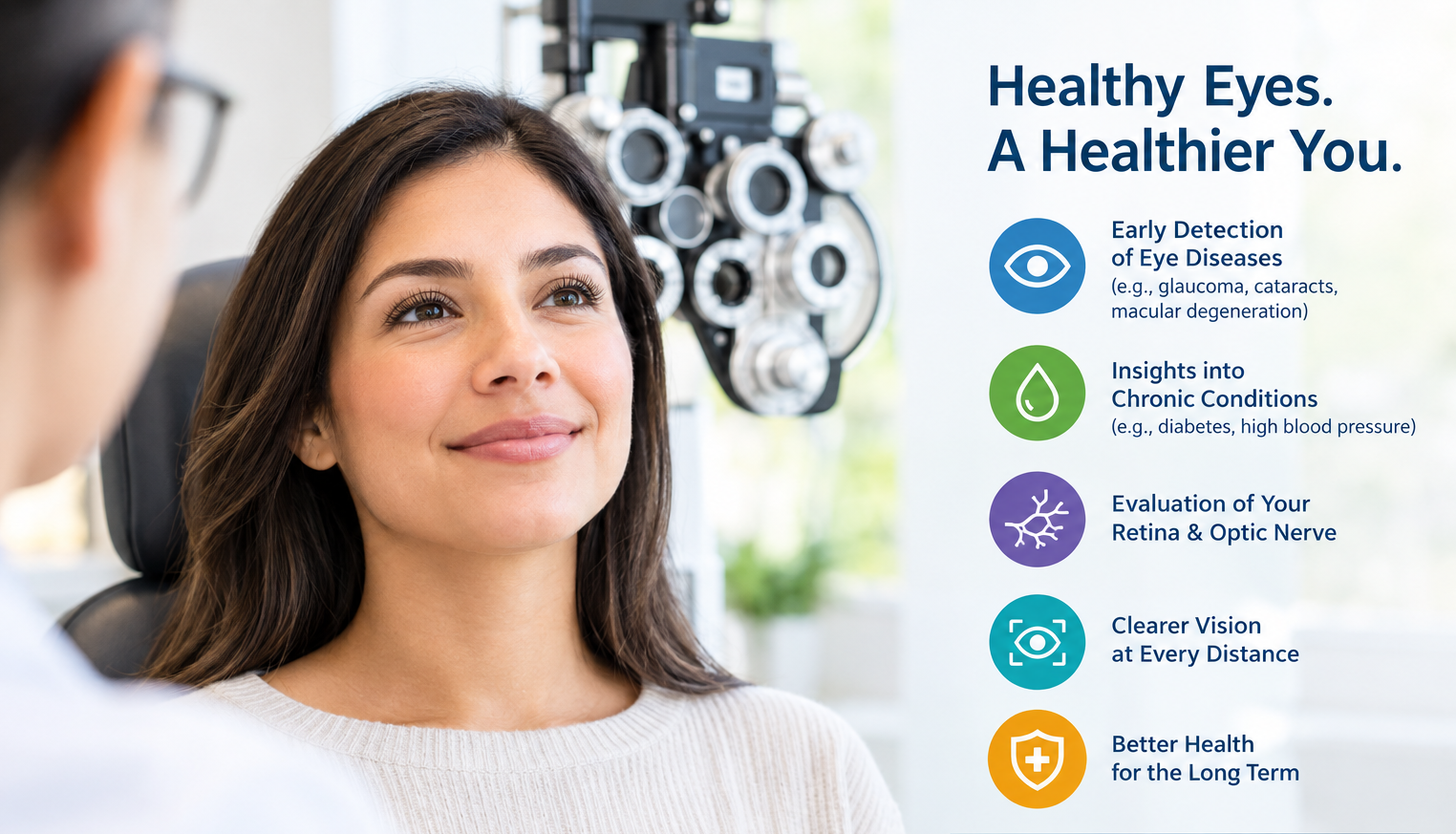
During a comprehensive eye examination, your eye doctor evaluates both your vision and the health of your eyes. Depending on your individual risk factors and medical history, an examination may help identify changes associated with conditions such as diabetes, high blood pressure, glaucoma, cataracts, and other eye diseases.
Some of these conditions may have few or no noticeable symptoms in their early stages.
That's why waiting until something seems wrong isn't always the best approach.
An Eye Exam Is More Than a Vision Test
A basic vision screening may tell you whether you can see clearly at a particular distance. A comprehensive eye examination goes much further.
Your optometrist may evaluate:
How clearly you see at different distances
How your eyes work together
Your ability to focus
Eye pressure and other indicators of eye health
The health of the retina and optic nerve
The condition of the structures at the front of the eye
Signs of common eye diseases and other abnormalities
Your eye doctor also considers your age, health history, medications, family history, and individual risk factors when determining what should be evaluated or tested.
Diabetes and Your Eyes
Diabetes can affect the blood vessels in the retina, the light-sensitive tissue at the back of the eye.
Diabetic eye disease may develop without obvious symptoms in its early stages. Regular eye care is therefore particularly important for people who have diabetes or are at increased risk of developing it.
If you have diabetes, be sure to tell your eye doctor. Your optometrist can work with your other healthcare providers to help monitor your eye and overall health.
High Blood Pressure Can Also Affect Your Eyes
High blood pressure can affect the body's blood vessels, including those in the retina.
Changes in the retinal blood vessels can sometimes be visible during an eye examination. This is one example of why comprehensive eye care can be an important part of your overall health routine.
An eye exam isn't a replacement for regular medical care, but it can provide another valuable opportunity to monitor your health.
Glaucoma: A Condition You May Not Notice
Glaucoma is a group of eye diseases that can damage the optic nerve and cause permanent vision loss.
One of the challenges with glaucoma is that it may develop gradually without noticeable symptoms. By the time a person recognizes a change in peripheral vision, significant and permanent damage has likely already occurred.
Routine eye examinations allow your eye doctor to assess your risk and monitor for changes over time.
Cataracts and Other Age-Related Changes
As we get older, our eyes naturally change. Cataracts, age-related macular degeneration, and other conditions become more common with age.
Changes in vision shouldn't simply be considered a normal part of getting older.
If you notice blurry vision, difficulty seeing at night, increased sensitivity to light, colors appearing less vivid, or other changes, schedule an eye examination. Your optometrist can determine whether the change is related to your prescription or something affecting your eye health.
When Should You Schedule an Eye Exam?
The right examination schedule varies from person to person. Your recommended frequency may depend on your age, health, family history, vision needs, medications, and risk factors for eye disease.
You should also schedule an appointment if you've noticed a change in your vision or eye comfort.
Don't wait for your next routine appointment if you experience sudden vision loss, significant eye pain, new double vision, a sudden increase in floaters or flashes, or other sudden changes in your vision. These symptoms require prompt evaluation to preserve your eye health and have the best visual outcome.
Make Eye Health Part of Your Overall Health Routine
Your eyes are an important part of your overall well-being. Regular comprehensive eye examinations can help your optometrist monitor your vision, evaluate the health of your eyes, and identify changes that may require further attention.
At Bensenville Eye Care, our doctors emphasize prevention and early detection as part of comprehensive eye care. We provide eye examinations and medical eye care for patients throughout Bensenville and the surrounding Chicagoland communities.
If it's been a while since your last eye exam—or if you've noticed a change in your vision—October is a great time to make your eye health a priority.
Schedule your comprehensive eye exam with Bensenville Eye Care and take an important step toward protecting your vision and your overall health.

Keep
In Touch
Monday & Thursday
9:00 AM to 7:00 PM
Wednesday & Friday
9:00 AM to 3:00 PM
Saturday
8:30 AM to 12:00 PM
Tuesday, Sunday
Closed
© 2026 Bensenville Eye Care - All Rights Reserved - Accessibility Statement - Privacy Policy - Sitemap
Powered by 
